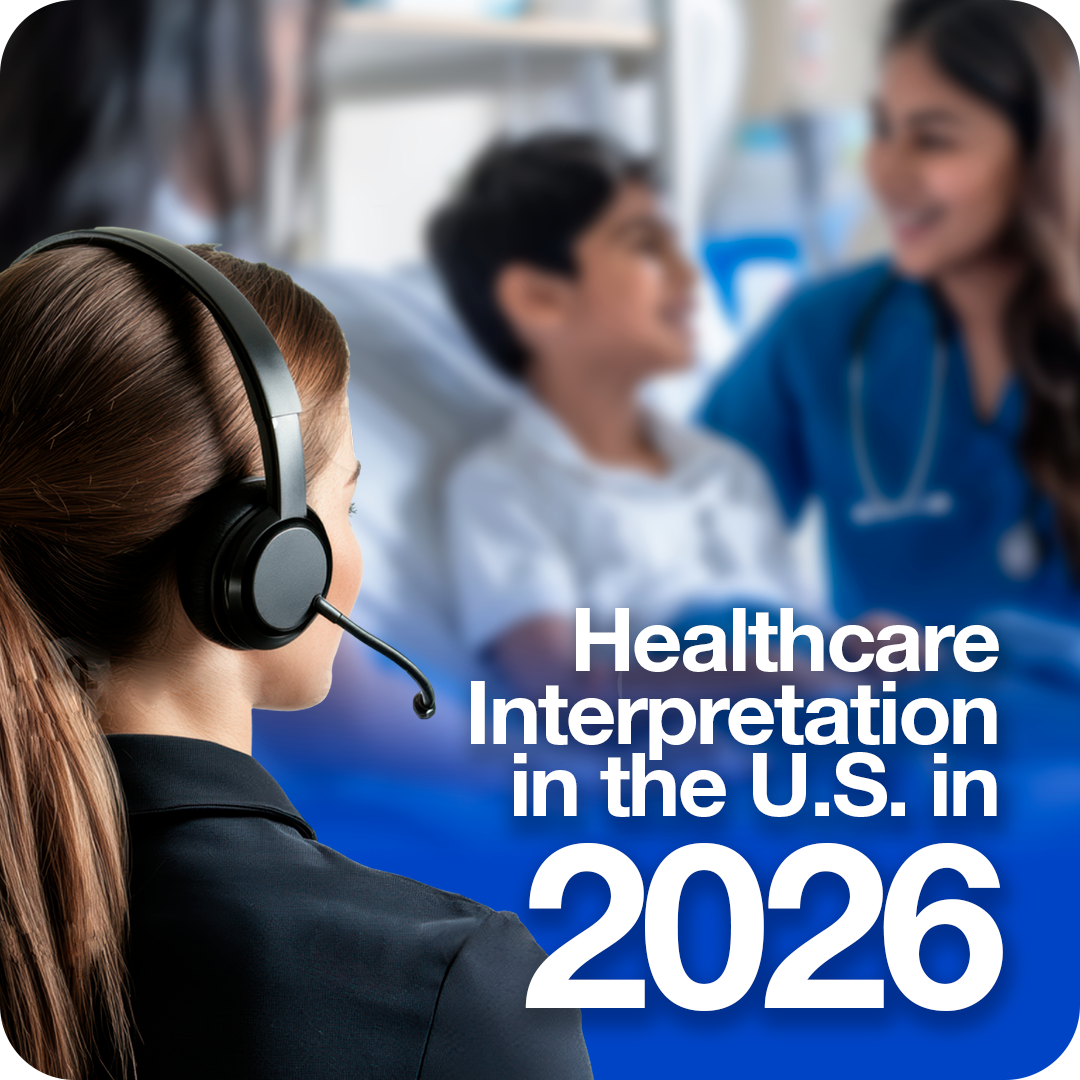



Healthcare Interpretation in the U.S. in 2026: When Language Stops Being a Detail and Becomes Part of Diagnosis
At the core of any healthcare system should be the certainty that every patient can be understood—and can clearly understand what is being said to them.
In the United States, in 2026, that certainty is still far from reality for millions of patients with limited English proficiency. What was once viewed as a “nice-to-have” service has become a central pillar of clinical safety, equity, and legal compliance.
The Real Context of 2026
Three major forces are converging in the U.S. healthcare system:
- 1. An increase in extreme weather events from hurricanes to heat waves—placing additional strain on emergency departments and hospital services.
- 2. Telemedicine and remote care, which have permanently changed how patients and providers communicate.
- 3. Sustained growth of the Limited English Proficiency (LEP) population, particularly Spanish-speaking patients and other linguistically diverse communities (HHS.gov).
In states like Florida where ongoing migration, medical tourism, and a large older adult population intersect the ability to communicate clearly is just as critical as making the correct clinical diagnosis. (HHS.gov)

The Most Common Mistake: “Good Enough” Communication
In theory, most hospitals and clinics understand that they are required to offer interpretation services.
In practice, many rely on superficial solutions:
- bilingual staff without medical interpreting training
- family members or ad-hoc employees
- rushed explanations without confirming understanding
- automated tools with no human oversight
But in healthcare, “good enough” does not exist. A misunderstood symptom, incomplete instruction, or an unasked question can fundamentally alter the course of care.
When the Failure Is Not Medical—but Communicational
Consider a scenario that is far from uncommon in emergency settings:
A Spanish-speaking patient arrives with dehydration after a heat wave. Before discharge, the physician explains which warning signs should prompt a return to the hospital.
The explanation is interpreted quickly, without verifying whether the patient fully understood the details.
The patient hears they should come back “if they feel unwell,” but does not grasp that mental confusion or disorientation are urgent red flags.
Hours later, the patient returns in significantly worse condition.
No. The communication did.
These types of breakdowns occur more often than many realize and can result in higher clinical risk, longer hospital stays, and avoidable additional costs (The Language Doctors)

The Legal Framework: Why Medical Interpretation Is Not Optional
Medical interpretation is not based solely on best practices or cultural sensitivity—it has a clear legal foundation in the United States.
Access to language services in healthcare settings is supported by:
- 1. Title VI of the Civil Rights Act, which prohibits discrimination based on national origin—including language—in federally funded programs (pmc.ncbi.nlm.nih.gov)
- 2. Language access requirements enforced by the HHS Office for Civil Rights, which mandate accommodations for LEP patients.
- 3. Professional standards that distinguish trained medical interpreters from unqualified bilingual staff, safeguarding the quality of communication (Código de ética ELS PDF).
This means interpretation is not an optional add-on it is an integral part of safe, legally responsible healthcare delivery.
The Interpreter’s Role Is Not “Translation”—It Is Real Understanding
The medical interpreter of 2026 is far removed from the idea of someone who simply repeats words in another language. Their role now includes:
- accurately conveying specialized clinical terminology
- managing emotionally charged conversations
- bridging generational, cultural, and linguistic differences
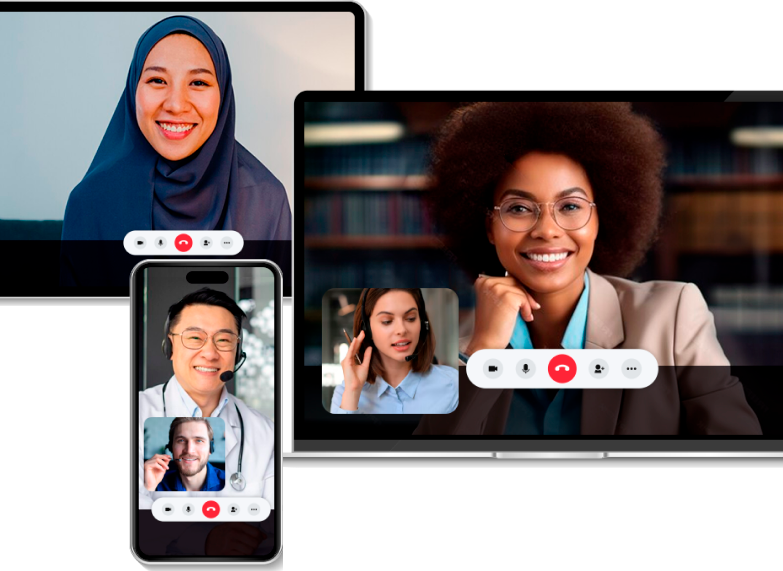
- facilitating communication in remote care models such as telemedicine
- helping care teams recognize nonverbal cues and confirm true understanding.
In areas such as mental health, oncology, and chronic disease management, the presence of a trained medical interpreter makes a measurable difference in patient safety and treatment adherence.
What About Artificial Intelligence? Useful but With Clear Limits
There is no question that technology has brought valuable tools to healthcare interpretation:
- real-time transcription
- language routing support
- reduced waiting times for interpreter access

However, in high-risk clinical environments, AI alone cannot replace human judgment or contextual understanding. Decisions involving informed consent, complex diagnoses, or emotional crises should never rely solely on algorithms (arxiv.org).
The most responsible healthcare providers in 2026 understand that technology must support not replace—human communication.
Why Many Hospitals Are Rethinking Their Language Services
Rather than focusing exclusively on the lowest cost per minute, healthcare leaders are now asking different questions:
- How are medical interpreters trained?
- How is quality documented for each interaction?
- What happens during demand surges?
- Can effective communication be demonstrated if audited?
These are not abstract concerns. They directly affect patient safety, regulatory compliance, and the trust a community place in its healthcare institutions.
As a result, many language service providers have had to fundamentally rethink how they operate. Simply offering on-demand interpreters is no longer sufficient. The expectation now is a model that combines specialized human interpretation, active quality assurance processes, responsible use of technology, and real—not merely stated—regulatory compliance.
At Elite Language Services, this approach is not a marketing strategy. It is a direct response to what the healthcare system demands in 2026: less improvisation, fewer generic solutions, and greater accountability in every clinical interaction.
Conclusion: Interpreting Is Caring
In 2026, medical interpretation is no longer a peripheral “language service.” It is an essential component of clinical care, patient safety, and healthcare compliance.
Hospitals that communicate well do more than diagnose accurately. They:
- Reduce medical errors
- Building patient trust
- Improve clinical outcomes
- Lower legal and regulatory risk
The difference between an instruction that is understood and one that is misunderstood can be as profound as the difference between recovery and harm.
 Contact us today and let’s strengthen language access together.