


5 Things Inside Out 2 Teaches Us About Interpretation and Being Truly Heard
We’ve all had moments where our feelings are louder than our words.
You know something’s wrong. You can feel a mix of fear, sadness, confusion and maybe anger, but when you try to explain it—especially in a second language—everything shrinks into: “I’m fine… it’s nothing… don’t worry.”
Inside Out 2 turns that everyday experience into a whole cast of characters. Riley’s mind is no longer just Joy, Sadness, Anger, Fear and Disgust. Now Anxiety, Envy, Embarrassment and Ennui show up too, making her inner world more crowded and more complicated.
Real life doesn’t give us a control panel with little colored characters. It gives us words. And for millions of people, the language their heart uses is not the language their doctor, lawyer, teacher or social worker uses.
That’s where interpreters and language access come in.
Here are 5 things Inside Out 2 teaches us about interpretation and what it really means to be heard.

1. Your Emotional Vocabulary Can Be Bigger Than Your Language Vocabulary
As Riley grows, her emotions don’t get simpler—they get more precise. She isn’t just “happy” or “sad” anymore. She can feel excited and terrified about hockey, proud and embarrassed in the same moment, hopeful about the future and worried about losing what she has. Inside Out 2 makes that visible by adding new emotions like Anxiety and Embarrassment to the control room.
Something similar happens to all of us: our emotional vocabulary grows faster than our actual words. We learn the difference between stress and burnout, between worry and panic, between sadness and grief. But when someone has to explain those feelings in a language that isn’t their first, especially in serious settings, everything often gets reduced to a handful of safe phrases.
In many hospitals, courts, schools and social services, people can handle basic conversation in a second language, yet struggle with sentences like “I feel numb most of the time,” or “I’m ashamed to say this, but I need help.” Their inner world looks like Riley’s—full of nuance—but the language available to them is stuck on “good,” “bad,” “fine.”
Interpreters help bridge that gap. They make space for people to use the full richness of their own language, and they choose equivalent expressions in the other language that carry the right weight. That way, what someone really feels has a better chance of arriving intact, instead of getting flattened into a single easy word.
2. The Control Room Needs a Clear Channel to the Outside World
In Inside Out, we watch Riley’s emotions reacting to her life from a big console. In Inside Out 2, that console is even more chaotic. Joy, Anxiety, Sadness and the rest are constantly trying to decide what to send up to the surface. It’s messy, but it’s honest: inside, there’s a lot more going on than anyone outside can see.
That’s exactly what happens when someone walks into a serious appointment. On the inside, different emotions are competing for the mic. Joy is looking for something positive to cling to. Sadness is heavy and wants to slow things down. Anxiety is running worst-case scenarios. Embarrassment is telling them not to say too much. On the outside, a professional only sees a face, some body language and whatever words manage to get out.
If those words have to pass through a language the person doesn’t fully speak, the connection between the “control room” and the “consultation room” gets fuzzy. A person who is terrified might say “just a little pain.” Someone who is deeply confused might nod and say “I understand” because that’s the phrase they know. A parent who is worried might say “he’s fine” because they don’t know how to explain what feels wrong.
Interpreters provide a clear channel. They carry the message into the language each side truly understands, keep the tone as close as possible to the original, and notice when something seems inconsistent—like a flat “I’m fine” that doesn’t match the person’s voice, posture or earlier words. They don’t solve the problem by themselves, but they make sure the signal between inside and outside is as clean as possible.
3. When Anxiety Has the Mic, Language Access Helps Turn the Volume Down
In Inside Out 2, Anxiety doesn’t tiptoe into the story. She storms into headquarters with color-coded charts and disaster plans, convinced that if she doesn’t control everything, everything will fall apart. The movie plays it with humor, but the feeling is very familiar.
Many people facing language barriers arrive at appointments with Anxiety already in charge. They’re worried about saying the wrong thing, worried about being judged, worried about losing access to services if they admit they don’t understand. Add fast explanations, unfamiliar forms and a room that feels rushed, and Anxiety gets exactly what she needs to spiral.
When that happens, people often choose the quickest way out of discomfort. They say “yes” when they’re not sure. They pretend to understand. They downplay symptoms or concerns. Later, they might not come back for follow-up or respond to calls, not because they don’t care, but because the experience was overwhelming.
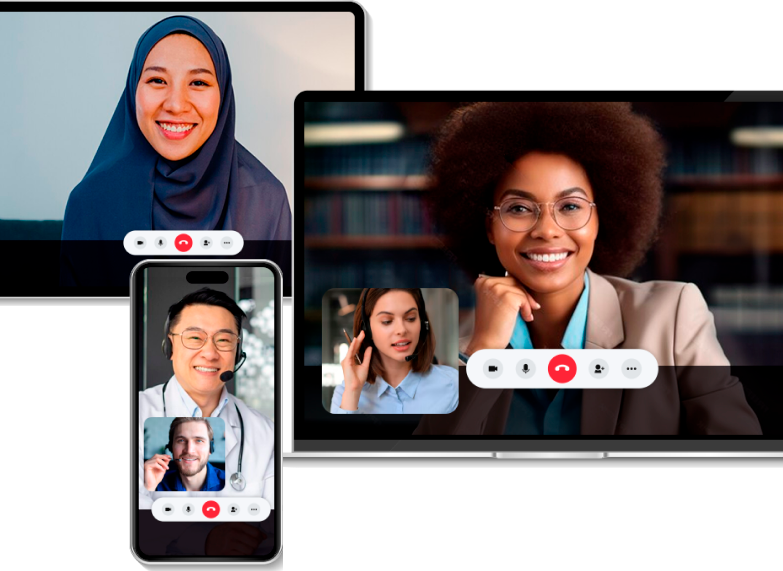
Language access changes the emotional temperature. With a professional interpreter—whether in person, by phone or on video—people can ask for repetition and clarification in their own language. They can check what happens if they decline a procedure or say they’re not ready. They can admit, “I’m a little lost,” without also having to worry about grammar and vocabulary at the same time.
Anxiety doesn’t disappear, but it no longer controls every decision. There is someone in the room whose only job is to protect understanding, and that alone can make it easier for people to stay, listen and participate instead of shutting down.
4. Shame and Embarrassment Can Silence People—Interpreters Help the Story Come Out
One of the new characters in Inside Out 2 is Embarrassment, who would rather sink through the floor than be seen. It’s funny to watch him hide behind his hoodie, but the emotion he represents is one of the strongest silencers in real life.
Now picture trying to talk about sexually transmitted infections, domestic violence, mental health, money problems or immigration status in a second language. It’s hard enough to say those things in your own language. Add the fear of making mistakes, or the fact that your “interpreter” is your child or neighbor, and the easiest option is often to say very little.
In those moments, people may minimize what is happening or skip important details because they are too ashamed to say them out loud in a language they don’t feel at home in. Professionals might hear “everything is okay” when things are not okay at all.
Here is where professional interpretation services make a quiet but crucial difference. A trained interpreter is not part of the family and not someone you will see at a social event. They are bound by confidentiality and used to hearing difficult stories without reacting. They know the appropriate terms in both languages and can express them in a way that feels respectful rather than humiliating.
Having that kind of neutral presence lowers the emotional cost of honesty. It becomes more possible for someone to say, “This is hard to talk about, but…” and then tell the truth. The interpreter is not there to judge the story, but to make sure it has a chance to be told completely.
5. People Are More Than “Fine” – Interpreters Make Space for the Whole Story
The heart of the first Inside Out is Joy’s realization that Riley doesn’t need to be happy all the time. Sadness and the other “difficult” emotions are not mistakes; they are part of being human. They signal when something matters, when we need help, when we’re ready to be honest.
The same lesson applies when we think about interpretation. Without proper language access, professionals often only hear the simplest words a person can reach for in a second language—yes, no, fine, okay. Those words are safe. They end the interaction. But they don’t tell the whole story.
In reality, people are rarely just “fine.” They are worried and hopeful, angry and grateful, exhausted and still trying. Important decisions about health, rights and safety need room for all of that complexity. It’s almost impossible to fit it into a couple of memorized phrases.
Professional interpretation and translation services make space for that full story to surface. When someone can speak in their own language and rely on a trained interpreter to carry their words across, they can afford to be more specific and more honest. They can say, “I agreed last time, but I’m not sure anymore,” or “I’m scared this will happen again,” instead of nodding and walking away.
Organizations that invest in medical interpreters, legal interpreters, sign language interpreters, remote interpreting and translated documents are doing more than complying with a rule. They’re sending a clear message: you don’t have to shrink your life down to the few words you know in our language. You can bring your whole self—and we will meet you there.
In the end, Inside Out 2 reminds us that our inner lives are complicated and crowded, and that this is normal. Interpreters step into that complexity every day. Their work is not only about switching words between languages, but about making sure people are truly heard in the moments that shape their lives.
We can’t promise anyone a life without Anxiety, Embarrassment or Sadness. But we can decide that language itself will not be the reason their story is misunderstood.