


Certified Interpreters and Management Technology: A Necessary Standard in Critical Settings Like Healthcare
In the U.S. healthcare system, accurate communication can be the difference between a correct diagnosis and a clinical error. Certified medical interpreters play a critical role in ensuring safe and compliant communication for patients with Limited English Proficiency (LEP).
Why Certified Medical Interpreters Are Critical in Healthcare
In these scenarios—emergency rooms, medical consultations, psychological evaluations, surgical procedures—the presence of certified interpreters trained in medical terminology and clinical protocols is not just recommended; it is essential.
In response to this need, a solution increasingly adopted by hospitals, clinics, and healthcare networks has emerged: partnering with a Language Solutions Integrator (LSI) that operates through an Interpreter Management System (IMS).
What Is a Language Solutions Integrator (LSI)?
A Language Solutions Integrator (LSI) is an organization that goes beyond merely supplying interpreters or translations—it designs and implements comprehensive multilingual solutions by integrating technology, artificial intelligence, and specialized human talent.
These entities are not only responsible for providing access to interpretation but also for ensuring quality, regulatory compliance, and traceability, blending automation with human oversight. Their value proposition always includes professional interpreters—qualified, certified and trained—who are selected, managed, and evaluated under rigorous standards of linguistic quality and professional ethics.
How an Interpreter Management System (IMS) Supports Medical Compliance
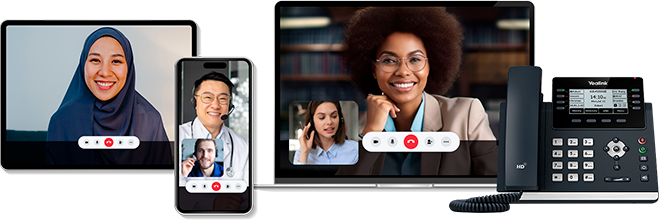
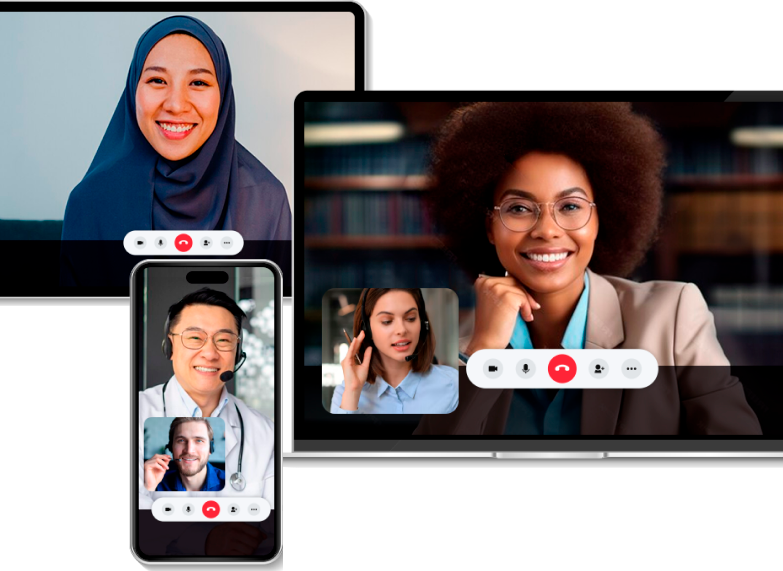
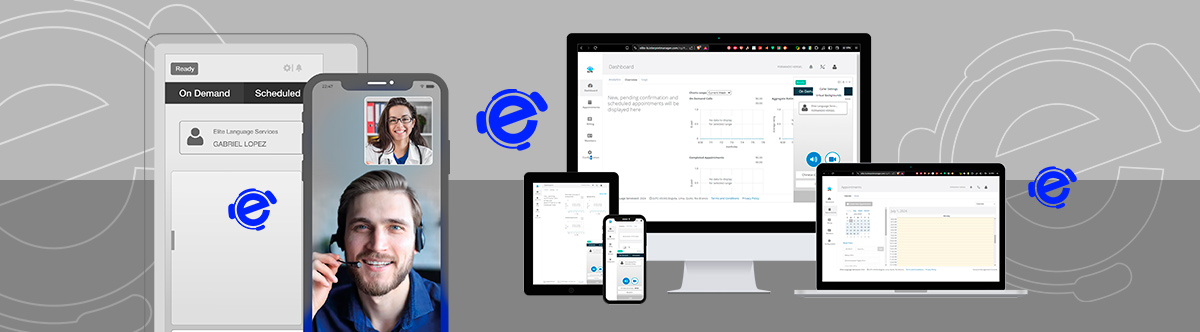
An Interpreter Management System (IMS) is the technological tool that allows institutions to coordinate, assign, monitor, and evaluate remote interpretation services (telephonic or on-demand video) quickly, securely, and efficiently. This technology enables:
But beyond the technology itself, what truly makes a difference is how it's combined with a trained human team. An IMS without the support of an LSI committed to linguistic quality and professional oversight would be nothing more than an empty tool.
- Requesting an interpreter in seconds, 24/7.
- Choosing from multiple languages and interpretation types (VRI, OPI).
- Generating detailed reports on usage, response times, and compliance.
- Seamless integration into medical or administrative workflows.
- Ensuring compliance with regulations such as HIPAA, Title VI, and ADA.
Healthcare Interpreting Requires Professional Certification
Not all interpreters are prepared for medical environments. Professional certification, knowledge of clinical protocols, familiarity with sensitive topics (such as mental health, addictions, critical treatments, or palliative care), and the ability to handle high-pressure situations are essential attributes that only a well-managed team can guarantee.
An LSI with a functional IMS ensures that every interaction between patient and healthcare provider is backed by a structure designed to reduce errors, enhance the patient experience, and optimize medical resources.
Why Healthcare Organizations Choose Certified Medical Interpreters
At Elite Language Services, we work with professional interpreters trained for medical environments, ready to connect within seconds through our platform. Our system enables immediate service in over 300 languages, with full regulatory compliance and quality standards.
If you represent a clinic, hospital, healthcare network, or primary care center, let’s talk today. We’re ready to help you guarantee effective and safe language access—where it matters most: at the patient’s side.

Conclusion
In settings like healthcare—where speed saves lives and precision prevents costly mistakes—working with a Language Solutions Integrator operating an Interpreter Management System is not just a technological choice: it is a strategic, ethical, and operational decision.
By combining remote interpretation technology, user-friendly platforms, and, most importantly, certified and well-managed interpreters, it’s possible to provide safe, effective, and human language access for all patients—no matter what language they speak.