


Professional Interpretation and Translation Services: How to Choose What Your Organization Really Needs
In a multilingual world, “we’ll figure it out” is not a language access strategy. Hospitals, courts, schools, nonprofits and global companies all face moments where communication has to be clear, accurate and fast. That’s where professional interpretation services and translation services come in. The challenge isn’t whether to use them, but how to choose the right type of service—phone, remote, medical, legal, conference, written translation—without wasting time or budget.

This guide walks through the main types of interpretation and translation services, what they’re best for, and how to match them to your real-life scenarios.
What Are Professional Interpretation Services?
Professional interpretation services are live, spoken-language solutions that help people who don’t share a common language communicate in real time. Unlike “someone who speaks both languages,” professional interpreters are trained to:
– Work in consecutive or simultaneous modes
– Maintain confidentiality and neutrality
– Handle specialized terminology (medical, legal, technical)
– Preserve tone, intent, and nuance—not just individual words
When you partner with a provider that offers integrated interpretation and translation services, you get access to different formats (in-person, remote interpretation services, hybrid) plus support for written content. That matters when you want consistent quality across every touchpoint—calls, meetings, appointments, events and documents.
Phone Interpretation Services vs. Remote & Video Interpreting
For many organizations, the most flexible option is phone interpretation services. They’re ideal when:
– You need on-demand, 24/7 access to interpreters
– The conversation is short or unplanned (front desk, quick updates, intake calls)
– In-person interpreters aren’t realistic for every language
With phone interpretation, staff dial a dedicated number, request a language, and connect with an interpreter in minutes. It’s fast, scalable and works almost anywhere there’s a phone line.
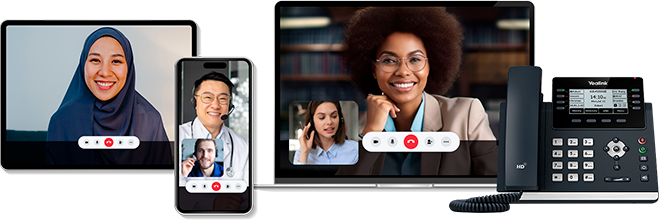
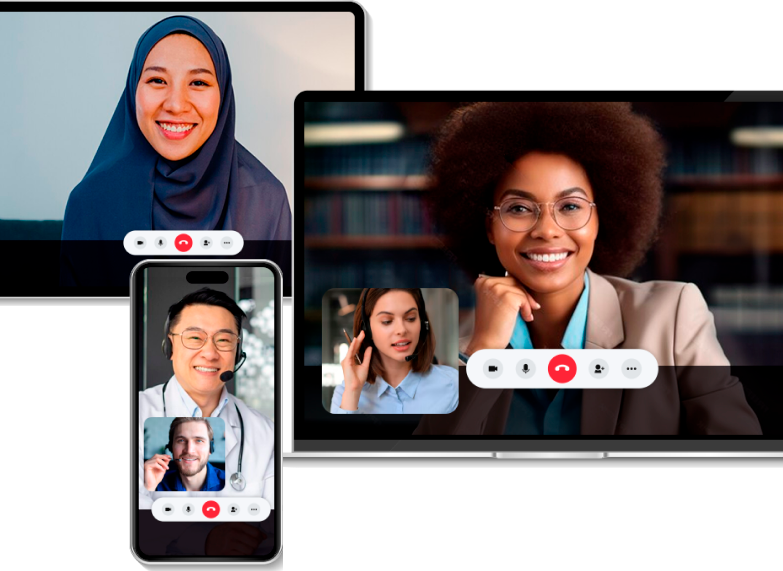
However, some situations benefit from video remote interpretation (VRI) and other remote interpretation services. Video is particularly useful when:
– Facial expressions and visual cues matter (e.g., working with sign language users)
– The topic is sensitive, and rapport is important
– The encounter is longer, such as telehealth sessions or virtual meetings
A strong language access strategy usually combines both: phone interpretation services for quick, everyday needs, and video remote interpreting for more complex or relationship-based interactions.
When You Must Use Medical Interpretation Services
In healthcare, the stakes are higher. Here, medical interpretation services are not a nice extra; they are part of patient safety and compliance.
Certified medical interpreters and trained healthcare interpreters:
– Understand medical terminology and common clinical workflows
– Know how to support informed consent discussions and discharge instructions
– Are familiar with privacy regulations and HIPAA-compliant practices
– Can navigate sensitive topics like mental health, reproductive health, and end-of-life care
Relying on bilingual staff or family members can lead to omissions, errors, and misunderstandings that affect diagnosis and treatment. If your organization provides care to patients with limited English proficiency, you should be asking:
– Do we have access to qualified medical interpreters (on-site, phone, or video)?
– Are we using them for high-risk touchpoints: triage, consent, procedures, discharge?
– Do our policies clearly distinguish between ad hoc help and professional interpretation services?
The answer to “when should we use medical interpretation services?” is simple: anytime language barriers could impact safety, understanding, or consent.
Why Legal Interpretation Services Can’t Be Improvised
In legal contexts, every word matters. Legal interpretation services support courts, law firms, immigration hearings, investigations and compliance environments where language errors can affect someone’s rights, money, or freedom.
Qualified legal interpreters are trained to:
– Work with legal terminology and procedural language
– Interpret faithfully without summarizing or changing register
– Maintain strict confidentiality and impartiality
– Handle high-pressure settings like cross-examinations, depositions or interviews
Using friends, family, or untrained bilingual staff in these settings can compromise due process and expose your organization to risk. Good questions to ask:
– Do we have a provider for legal interpretation services we can trust for court or compliance matters?
– Are we clear on when we need consecutive vs simultaneous interpretation (e.g., hearings vs client prep)?
– Do our attorneys and staff know how to work with interpreters effectively?
If the answer is “not really,” you’re not alone—but it’s a gap worth closing quickly.
Conference Interpretation Services for Events and Global Meetings
When you’re bringing people together across borders—conferences, summits, trainings, board meetings, webinars—conference interpretation services are what make the event truly multilingual.
Conference interpreters usually provide simultaneous interpretation, where they listen and speak at the same time so participants can follow in real time using headsets or remote platforms. This is especially valuable when:
– You have many participants and multiple languages
– You want interactive Q&A, not just one-way presentations
– You’re hosting hybrid or fully virtual events
Professional conference interpretation services require:
– Detailed preparation (agendas, slides, glossaries)
– Technical setup (booths, audio equipment, or virtual channels)
– Coordination between your AV/IT teams and the language services provider
The payoff: attendees can focus on content instead of decoding a second language, and your event becomes accessible to a truly global audience.
Where Translation Services Fit Into Your Strategy
While interpretation happens live, translation services take care of written content—before, during and after those conversations. Think:
– Patient forms, consent documents, educational brochures
– Legal contracts, notices, policies
– HR policies, training materials, and internal communications
– Websites, marketing campaigns, product documentation
A high-quality language partner will offer both professional interpretation services and professional translation services, so your spoken and written communication are aligned. This also reduces the risk of mixed terminology or inconsistent messaging across materials and interactions.
If you’ve ever asked, “What’s the difference between translation and interpretation?”, here’s the simple version:
– Interpretation = spoken, real-time
– Translation = written, document-based
Most organizations need both—even if they don’t realize it yet.
How to Choose the Right Interpretation and Translation Services Provider
Given all these options, how do you choose an interpretation service provider that actually fits your needs?
Look for a partner that:
–Offers a full range of interpretation and translation services (phone, video, on-site, medical, legal, conference, written translation)
– Can support your core industries (healthcare, legal, education, corporate, government)
– Provides qualified or certified interpreters where required
– Has clear standards for confidentiality, security, and compliance
– Offers reporting and analytics so you can track usage and outcomes
– Helps you design workflows, not just sell you minutes
Think beyond price-per-minute. The real value of professional interpretation services is in fewer errors, better experiences, stronger compliance and more trust from the people you serve.