


Stuck Between Worlds: Stranger Things, Language Barriers and the Human Cost of Not Being Understood
There’s a moment fans of Stranger Things know by heart:
Someone is trying to speak. The words don’t land. The danger feels closer than anyone else seems to realize.
Sometimes it’s Will, half-present in visions from The Upside Down.
Sometimes it’s Eleven, struggling to shape what she sees into sentences.
Sometimes it’s Max, eyes fixed on the sky, fighting Vecna with nothing but memory and a song.
We turn them into memes—the internet joking that Will can’t catch a break, that Steve is the exhausted babysitter of Hawkins, that Max’s playlist could save the world. But behind the jokes is something very real: the fear of not being believed, not being heard, not having the right words when it matters most.
That’s exactly what language barriers do in real life, especially in hospitals, courts, schools and social services. And it’s why language access, professional interpreters, and interpretation and translation services are about much more than “good customer service.” They are about whether people get to stay on the safe side of reality—or are left alone in their own Upside Down.

Will in The Upside Down: When You’re There, But Not Really There
When Will is trapped in The Upside Down, he isn’t in another universe. He’s in the same town, the same house, breathing almost the same air—just one layer out of reach.
He shouts. Lights flicker. Phones crackle. To Will, it feels like he’s yelling:
“I’m here. I’m hurt. Please don’t give up on me.”
To everyone else, it sounds like static.
That’s how many people with limited English proficiency experience institutions:
– They sit in the same hospital, but no one fully understands their description of pain.
– They attend the same school meeting, but the key decisions rush past them.
– They receive the same legal paperwork, but can’t grasp what they are agreeing to.
Inside, they know something is wrong.
Outside, their attempts at communication arrive in fragments.
Without professional interpreters—spoken and sign language interpreters—they are, in practice, Will: present, intelligent, desperate to connect, but treated as if their reality is only half real.
Language access is what turns flickering signals into a human conversation.
The Upside Down: A Parallel Version of the Same System
Hawkins and The Upside Down share the same map: houses, streets, and a school. But in that shadow world, everything familiar is covered in something toxic and strange. The rules aren’t posted anywhere. You learn them by getting hurt.
Language barriers create similar “parallel systems”:
– Two patients enter the same clinic, but only one hears a clear explanation of risks and options.
– Two parents attend the same parent–teacher conference, but only one leaves knowing what will actually happen next.
– Two people go through similar legal procedures, but only one truly understands what has just been decided about their life.
On paper, they received equal service.
In reality, one walked through Hawkins. The other fought through the Upside Down version of it.
Medical interpreters, legal interpreters, telephone interpreting, remote interpreting, and conference interpretation services don’t make systems perfect. But they bring people back into the same reality, where rules, choices and consequences are at least understandable in their own language.
Eleven: Strength Is Not the Same as Being Heard
Eleven is one of the strongest characters in the series. She can face monsters that most adults can’t even look at. Yet, often, she has fewer words than anyone else in the room.
She knows things nobody else knows. She feels danger long before others do. But when she tries to explain, it comes out as broken phrases, gestures, a look that has to carry what vocabulary can’t.
People fill in the gaps however they want. They read her silence as agreement, confusion, defiance—or nothing at all.
In real life, many people facing language barriers are like that:
– They are holding families together.
– They are navigating multiple jobs, countries, and responsibilities.
– They are incredibly resourceful—yet still lack the specific language for legal processes, medical nuance or mental health in a second language.
Being strong and intelligent does not erase the need for professional interpreters and translation services. You can be your family’s Eleven and still not have the words in English to question a diagnosis, negotiate a contract or describe a panic attack.
Interpreters don’t give people intelligence they didn’t have. They let that intelligence arrive fully formed.
Vecna, Silence and Max’s Song
When Vecna appears, he doesn’t choose at random. He targets people already carrying too much on the inside: guilt, grief, fear, secrets. He isolates them, wraps them in visions and words they can’t share, until it feels like they are disappearing into thin air.
There’s a scene many fans never forget: Max running from Vecna with “Running Up That Hill” blasting in her ears. The song becomes more than a soundtrack. It’s a lifeline—a reminder of who she is, who loves her, what is real.
Max doesn’t escape because the world suddenly becomes safe. She escapes because something reaches her on a frequency that Vecna can’t control.
Silence around language barriers can feel very close to that kind of danger:
– A patient stays quiet about side effects because they don’t know how to explain them.
– A survivor avoids describing abuse because their second language collapses under the weight of the subject.
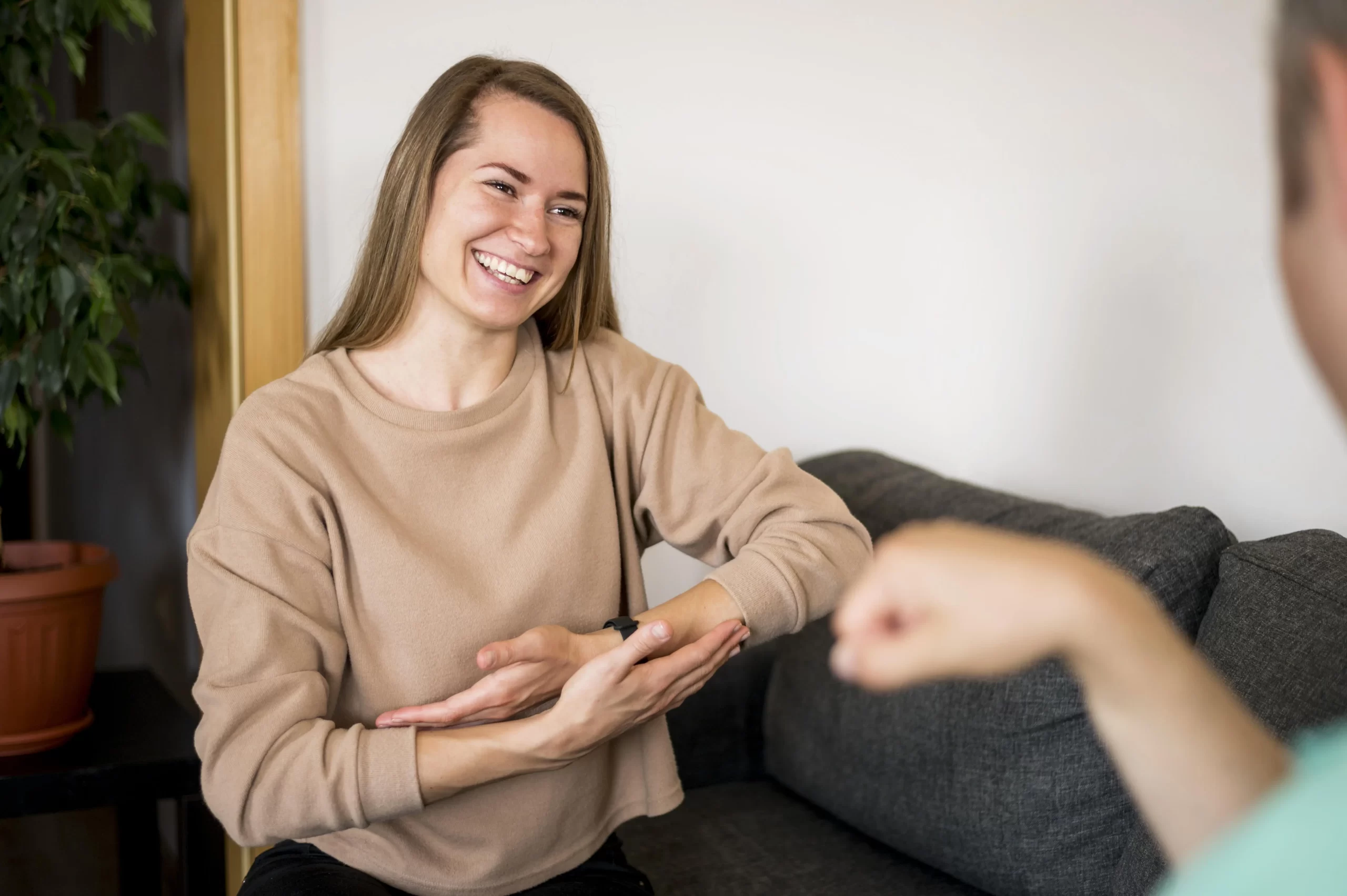
– A Deaf person sits through an appointment without a sign language interpreter, nodding because fighting for access is exhausting.
On paper, everything looks orderly.
Inside, someone might feel like they are floating in midair, hoping something—anything—pulls them back.
Language access doesn’t erase trauma or fear. But medical interpretation services and legal interpretation services work like Max’s song: they cut through noise, anchor a person to their own story, and give them a way back to themselves in the middle of a crisis.
The “Eleven Will Save Us” Strategy: Relying on One Bilingual Person
In Stranger Things, there’s a familiar beat: when things get really bad, everyone turns to the same person.
“We need El. She’s the only one who can stop this.”
In a TV show, it makes sense. Eleven genuinely has abilities no one else has. Even so, the weight of always being “the only one” nearly breaks her.
Many organizations do something similar with language access. They have:
– One nurse who “speaks Spanish.”
– One receptionist who “can interpret if needed.”
– One staff member who “helps with all the other languages too.”
When a situation comes up, people say, “Call them. They’re the only ones who can fix this.”
It’s the Eleven strategy of language access: wait for the same person to save the day, every day.
The problems are obvious:
– They can’t be everywhere at once.
– They may not be trained as professional interpreters.
– Their own workload and wellbeing suffer.
– High-risk situations—like informed consent, legal statements or mental health crises—are handled through goodwill instead of qualified support.
What works as drama in a series becomes, in real life, a serious risk—for patients, clients and the “one bilingual person” carrying far more than they should.
A real language access plan doesn’t ask one person to be Eleven.
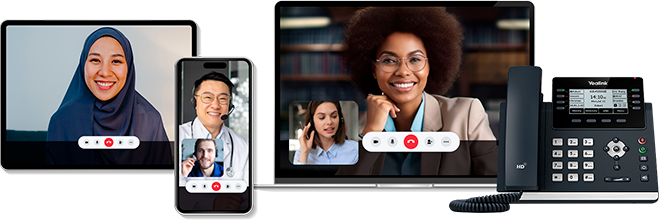
It builds a system: telephone interpreting, remote interpreting, on-site professional interpreters, translation services and clear policies, so the burden is shared and quality is consistent.
The Quiet Caregivers: The Ones Holding the Line
There’s another character the internet has quietly promoted to “team parent.” He didn’t plan on being responsible for anyone. Yet somehow, he’s always the one driving, waiting, patching people up, standing in front of the group with a bat in his hands.
He’s not on every poster. It just feels wrong when he isn’t there.
In many systems, interpreters play a similar, quiet role:
– They step into rooms full of stress and keep the conversation steady.
– They hear life-changing news twice, in two languages, so others can fully react.
– They connect calls nobody wants to make alone—insurance disputes, immigration interviews, end-of-life discussions.
– They go home carrying pieces of other people’s fear and hope that no one else saw up close.
Good telephone interpreting, remote interpreting and in-person interpreting can look almost invisible from the outside. The discharge goes smoothly. The hearing stays calm. The meeting ends with a plan.
Take the interpreter out of the scene, and it looks very different—and much less fair.
The Party: No One Survives Hawkins Alone, and No One Should Navigate Systems Alone Either
One of the most comforting truths in Stranger Things is that no one fights alone for long. There is always a group: kids, teenagers, adults, each with a different strength—strategy, stubbornness, loyalty, humor, courage.
That’s what interpretation and translation services should look like when they’re done well:
– Medical interpreters for clinical encounters, emergencies and consent.
– Legal interpreters for hearings, testimony, negotiations and rights-based processes.
– Sign language interpreters so Deaf and hard-of-hearing people are never sidelined.
– Conference interpretation services so multilingual meetings and events are truly shared spaces.
– Translation services so forms, letters, websites and instructions match the spoken support.
It’s not about finding “one bilingual person” and hoping they can carry everything. It’s about building a party—a coordinated group of tools and professional interpreters who make sure people don’t have to walk through complex systems alone, guessing in a language that isn’t theirs.
Closing the Episode: Choosing Not to Leave People in Their Own Upside Down
Some of the most powerful moments in Stranger Things are not the battles. They’re the quiet decisions:
Joyce refusing to accept that her son is simply “gone.”
Friends refusing to abandon each other when the story sounds impossible.
Max fighting her way back because something in the real world refuses to let her go.
Language barriers recreate that loneliness every day in softer ways. In waiting rooms where people nod to avoid embarrassment. In courtrooms where “Do you understand?” is answered with a hesitant “Yes,” because “No” feels dangerous. In phone calls where someone hangs up—not because the problem is solved, but because they’ve run out of words.
We can’t promise anyone a life without illness, conflict, or hard choices.
But we can decide that language itself will not be the reason someone feels trapped on the wrong side of reality.
That is what language access, professional interpreters, and interpretation and translation services are ultimately about:
Making sure that when life gets as strange as it sometimes does, no one is left banging on a wall between worlds, hoping the lights flicker in just the right pattern for someone to finally understand.